

Near Miami’s luxe hotels is a place that drew me in with all my senses. I was in Miami, but was I really? This was Little Havana – authentic and easy.
Miami has more than a million people of Latin origin who live and work there. It’s an American city with a distinctive Latin feel.
As soon as I entered this district between Fourth and 27th Avenues, I felt like I was in a foreign country. Signs are in Spanish. Latin music blares into the street. The smell of strong coffee permeates the air from streetside coffee windows. I was serenaded by clucking chickens, singing grackles, screeching parrots, and cooing doves.
This enclave, also called Calle Ocho (Eighth Street), has traditionally been the first place new Latino immigrants settle in Miami. It’s just a mile from luxury hotels like the Four Seasons, the Mandarin Oriental, and the Brickell Financial District.
In the 1950s, Calle Ocho became a refuge for Cuban exiles, where they could find or establish small businesses. Many have moved up and on, their places taken by Nicaraguans, Dominicans, Salvadorians, Mexicans, and Uruguayans. And they’re all eager to share their stories from the past.
They gave me information on where to eat, what foods to try, and how to get around. I soon discovered that the easiest way to do so was walking or by bus.
Before long, I was popping into colorful shops and trying local fruits I had never heard of before. Anyone for mamy? How about zapote?
Food was abundant at the most famous Little Havana restaurant called Versailles. It’s run by the Valls family, who are Cuban immigrants. This landmark has served the Latin community and eager tourists for more than 50 years.
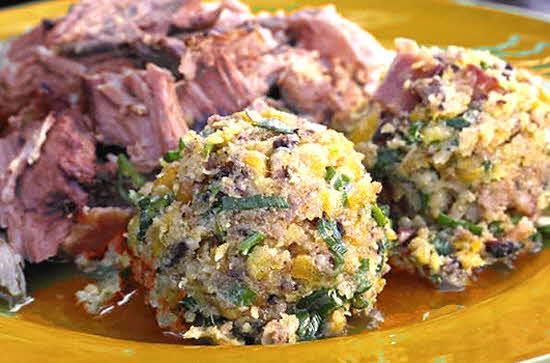
I checked out its opulent chandeliers and drapes. Was it like France’s Versailles? No, not with this Versailles’ formica counters and chrome tables. Still, the food was fit for a king. I tried one of their specialties: roast pork with black beans and rice. Muy bueno.
We tried several other Latin restaurants in the neighborhood. If you have a yen for Nicaraguan or Dominican specialties like mofongo – mashed plantains mixed with everything from salami to chicken or goat – Little Havana is the place to be. Instead of bread, I scarfed down plantain chips and was in my own special heaven.
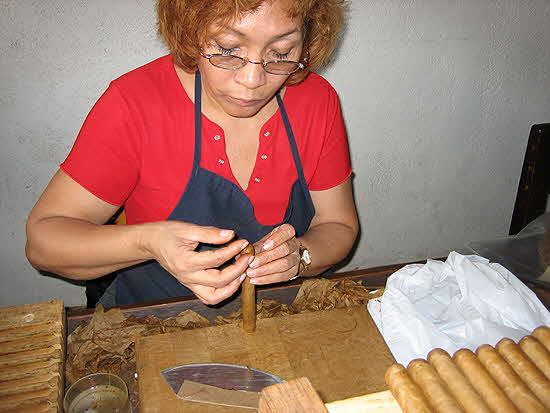
Then, it was time for a smoke. No Cuban meal would be complete without one. There are several small manufacturers still creating cigars right in Little Havana. We went to high-end Moore and Bode for a tour and to watch the fine art of cigar rolling. The owner spoke of it as an art form. The company returns émigrés to their traditional employment, while supporting the embargo on Cuban tobacco.
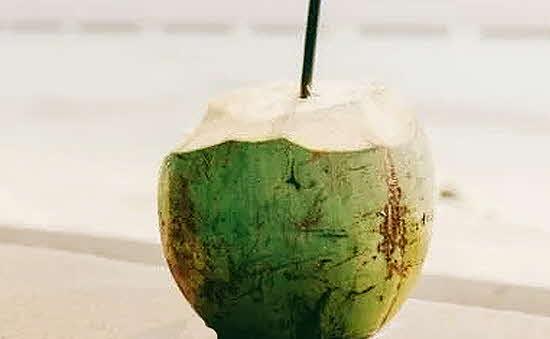
Next up: a refreshing coconut juice (coconut water) with a straw right in the shell. Los Pinarenos Fruteria offers other natural fruit juices like papaya, guayaba, and the Latin staple sugar cane juice. The family that owns it cooks one pot of stew a day. If you get there early, you might be one of the lucky few. We were sitting in the garden when the family rooster strolled by.
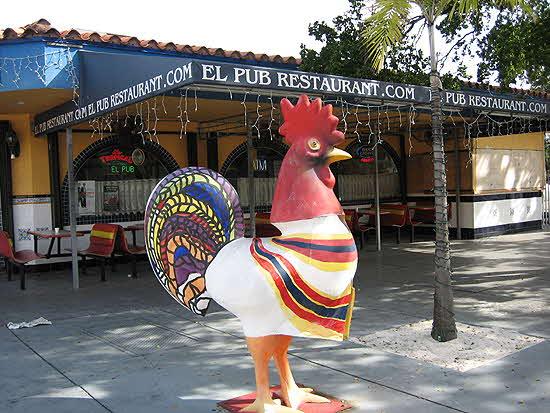
It seems that roosters are often pets of Calle Ocho residents. The everyday rooster is the symbol of this district. They stand outside businesses and on advertising. There’s even a “doctor” rooster outside a medical practice.
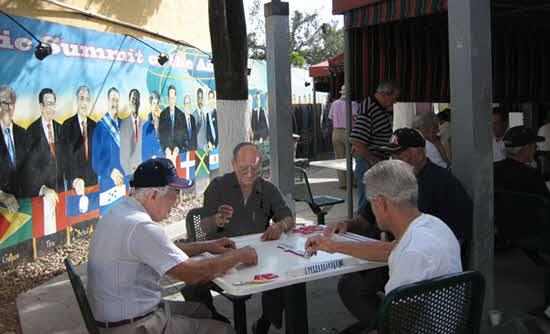
To lighten things up, I strolled through Domino Park at 14th and Eighth. There were scores of people playing dominoes and chess. A big mural featured presidents of the New World, including Bill Clinton. The place looked as though it was airlifted from pre-Communist Cuba. The viejos (old men) could see our excitement as we watched them play. After a while, they asked us to join in!
But we begged off, as we wanted to go for a swim. I sure hope to join in a game sometime, though. This non-Latina New Yorker came home with a new appreciation for a distinctive part of Miami and its residents.
Vive La Pequena Habana!
For further Information, visit the Greater Miami Convention and Visitors Bureau.

As a television producer and on-camera reporter, traveling to Asia, Europe, and around the U.S., Norma Davidoff got hooked on travel. She loved her work on television projects in Italy, France, Spain, Indonesia, India, Mexico, and Costa Rica. Norma liked nothing better than being on-location with a small camera crew, meeting locals to learn about their lives. Among many positions, she was producer/on-camera reporter for Newsweek Broadcasting, Director of Program Development for The Travel Channel, and Senior Producer for Ted Turner’s Better World Society. She is particularly proud of her work in public television in its infancy. These days, she writes feature and travel articles, many with her own photos. That has brought Norma to still more places to satisfy her curiosity about the world.


0 Comments