

Sicily is producing some very interesting white wines. The largest island in the Mediterranean is now one of Italy’s most exciting wine producers. The wines, especially the whites, range from sweet or savory and crisp to complex and startlingly age-worthy.
The unique terroir of the region includes volcanic-rich soils, rolling hills, and Mediterranean climate, making it an ideal environment for citrus trees and grapevines.
Sicily used to be infamous for its cheap jug reds, but thankfully no more. Widespread focus is given to native grapes, organic viticulture, lower yields, and careful winemaking.
The vast majority of these wines are dry, especially the ones made from Grillo, an autochthonous (indigenous) Sicilian grape. Grillo creates wines with intense citrus, especially grapefruit, and white stone fruit aromas. The result is seductive and excellent with seafood and grilled fish. I’ve been drinking Grillo wines for many years now. I love them with a great meal.
In the past, we have written about the lovely Malvasia bottles produced in Sicily and the Aeolian Islands. But those are only a small number of the delicious wines that now come from this province.
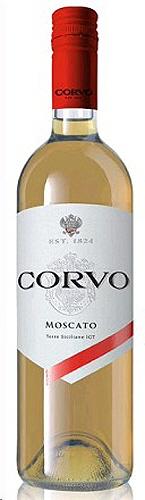 | 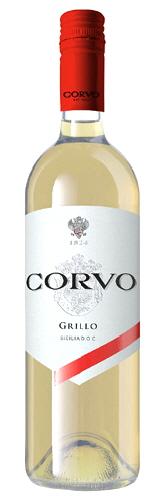 |
Nowadays, there are numerous monovarietal bottles from white grapes produced there, like the Corvo Grillo and Corvo Moscato, which I normally enjoy with seafood, fish, or light desserts (for the Moscato). The drier, Grillo-based bottles, are some of the most tasty wines produced on the island and work very well with Sicily’s traditional dishes.
There are also beautifully sweet monovarietals, like Donnafugata’s Ben Ryé Passito di Pantelleria made from a Moscato d’ Alessandria clone, locally called Zibibbo. It produces outstanding perfumed sweet wines on Isola di Pantelleria, the small island between Sicily and Tunisia.

Lovely blends, like Donnafugata’s Damarino, a blend of the three varietals Ansonica, Catarratto Bianco, and Grecanico, are produced in Sicily. Damarino has a delicate floral bouquet with hints of white flowers combined with citrus notes. In the mouth, there is fresh minerality. It’s great as an aperitif or accompanying appetizers and ideal as a complement to classic Mediterranean dishes, especially ones made from fatty fish.
Additionally, there are white wines from Planeta and Tasca d’Almerita that tend to be mostly on the dry side, again except for Malvasia and Moscato-based bottles. I visited those wineries and tasted their wines during a past press trip.
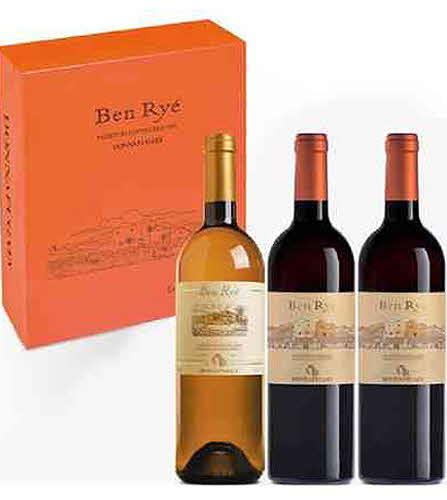
Price-wise, except for the Passitos, these are not expensive bottles, mostly coming in the $9-$25 range. The Passitos are in the $40-$80 range, even for the 375ml bottles that are almost standard now for sweet wines. Both the Malvasia and Moscato wines are enjoyably sweet and aromatic, but with enough underlining acidity not to be cloying.
It was seafaring Phoenicians and Greeks who initially planted grapes in Sicily. Some of the earliest locations date from 800 to 400 BC. According to Homeric lore, Scylla and Charybdis, the two immortal monsters that devoured mariners, were located on either side of the Messina Straights, a narrow channel between the eastern tip of Sicily (Punta del Faro) and the western tip of Calabria (Punta Pezzo).
Very strong tidal flows there change directions roughly every 12 hours, which made navigation very difficult for the shallow-keeled Greek trireme warships of Homer’s time.
Carthage, with territory on the southwestern half of Sicily, is responsible for planting the date and palm trees seen in many southern Sicilian gardens and parks.
Eventually, Roman settlers developed the vineyard terraces that are seen in different areas of the island.
If you haven’t tried these wines, get a bottle or two, and let us know what you think!

Manos Angelakis was one of the founders, the former Managing Editor for 25 years, the former Managing Editor Emeritus, and former Senior Food & Wine Writer of LuxuryWeb Magazine. He passed away in 2025 as an accomplished travel writer, photographer, and food and wine critic based in Hackensack, New Jersey. As a travel writer, he wrote extensively about numerous cities and countries. Manos was also certified as a Tuscan Wine Master and traveled to wine-producing areas in order to evaluate firsthand the product of top-rated vineyards. His articles in other publications include Vision Times and Epoch Times.


0 Comments