
Photo Essay: Images of Istanbul
Istanbul is, without question, one of the most beautiful cities in the world. Here are some of my favorite images that I took during my stay in Turkey.



Istanbul is, without question, one of the most beautiful cities in the world. Here are some of my favorite images that I took during my stay in Turkey.

Our hearts go out to all those affected, including the figure skating community, by the horrible American Airlines crash with the military helicopter in Washington, D.C.
Hotels and immigration. With the new administration in the White House, hotels could end up short-staffed since they often rely on immigrant employees. So be forewarned!
Court blocks Biden administration airline rule. The new rule forcing airlines to disclose all fees has been blocked by a judge for the time being. We’ll see what happens!
Secret passageway opens in Florence. A passageway in Florence, Italy was built for the elite in the 1500s so that they could avoid rubbing elbows with the riffraff. Now, it will be opened to the public for the first time. There are 106 steps to get down to the passage, but you don’t have to climb back up to exit. Tickets are 43 Euros unless you buy a ticket for the Uffizi Galleries. Then, it’s an add-on of 20 Euros. Free entry will be allowed the first Sunday of every month, but reservations need to be made months in advance.

News about the UK’s ETA requirement. Now that international travelers who don’t need a visa have to get an ETA (Electronic Travel Authorisation) to enter the UK, the government has decided NOT to require the ETA of those who are just transferring at UK airports to go elsewhere. The ETA will increase to 16 pounds, however.
Celebrity Cruises news. In 2027, Celebrity plans to launch river cruises for the first time. It has ordered ten ships for this purpose.
Hyatt upgrades. Hyatt hotels are now sometimes offering a chance to bid on an upgrade. Hmmm… I once bid on an airline upgrade with a European airline, but I don’t know if I’d do that at a hotel. I suppose you might get a good deal now and then.

Paris to Milan trains. After a 2023 landslide in the French Alps got in the way of this route, it will restart April 1st. The route is via Turin in Italy and run by Trenitalia.
Airline News
JetBlue fined. At the beginning of the month, the Department of Transportation in the U.S. fined JetBlue $2 million for repeated flight delays and is investigating other airlines. Of course, with the new administration in the White House, who knows what will come of this.
JetBlue premium seats. In other JetBlue news, they’ve launched their premium seats called “EvenMore.” They provide more legroom, three complimentary alcoholic drinks (God help us), cookies, priority check-in, early boarding, dedicated space in the overhead bin, and complimentary headphones (if you ask).
Delta flight evacuation. A Delta flight had to be evacuated via slide on January 10 at the Atlanta airport after an engine problem was discovered.

United Airlines entertainment upgrades. United will now have Bluetooth on 300 of its planes, and the screens will have 4K resolution. You can also get a control tower view on your personal screen.
American Airlines and Boeing delays. Boeing is behind in delivering new planes, so American Airlines has had to delay some new routes, as well as its new business class suites with privacy doors that are supposed to be on the new 787-9 planes and some 777-300ERs.
SpaceX space junk can cause flight delays. Qantas says they aren’t told far in advance when or where SpaceX rockets might fall from the sky. So it has had to sometimes issue last-minute flight delays on the route from Sydney to Johannesburg. Thanks, Elon! (eye roll)

If you happen to be in Peru, you would be hard pressed not to find the quintessential Peruvian drink – a Pisco Sour. It’s so celebrated in Peru that they have designated the first Saturday of February every year as National Pisco Sour Day.
This year, it falls on Saturday, February 1st and will herald in a day of fun, food, festivities, and cultural celebrations throughout Peru. As such, the Pisco Sour has earned its place as the country’s most celebrated cocktail contribution to the world.
Expect events and activities at bars and restaurants across Peru. Food fairs featuring traditional Peruvian cuisine, cultural events highlighting the history of Pisco, and demonstrations and tastings of different ways to fix the Pisco Sour adult beverage will be the norm for the day.
But this holiday celebrates more than Pisco Sour, as it also promotes Peruvian gastronomy and culture. Celebrations include various events where chefs and bartenders showcase their skills, reinforcing the idea that Pisco Sour is deeply woven into the fabric of Peruvian culture.

What is Pisco Sour?
This iconic cocktail, born in the lively streets of Lima, represents more than just a refreshing drink – it stands as a testament to Peru’s rich heritage and innovative mixology through its unique blend of local ingredients and cultural authenticity.
The traditional drink’s base, pisco, is a Peruvian grape brandy that comes from grapes grown in Peru’s coastal valleys, where the unique climate and soil create perfect growing conditions. Regional and local bartenders added their own touch by incorporating egg whites and topping the drink with Angostura bitters, creating the signature egg-white top. It will also have fresh lime juice and sugar.
Where is the birthplace of Pisco?
Peru is considered the birthplace of pisco, with historical roots that can be traced back to the 16th century, when the Spanish colonizers brought grapevines to the arid coastal regions of the country during the colonial era. The grapes thrived and were ideal for winemaking. However, this competition was soon considered to be a threat to Spain and domestic Spanish wines. As a result, all Peruvian wines were banned for export to Spain.
But Peruvian resilience, as always, was strong, and farmers innovated and started producing the pisco brandy. This resulted in grape-growers increasing their production of brandy to meet an insatiable demand, especially overseas. These bottles were shipped from the port of Pisco, with exports peaking in the 17th to 18th centuries.
Then, the War of the Pacific from 1879-1883 proved to be another challenge to Peruvian resilience. With a far superior Naval force, Chile attacked Peru to exploit some of the land that harbored rich nitrate deposits in the Atacama Desert. Though this was originally part of Peru, it became part of Chile as an outcome of the war. It was during this time that the Chilean army methodically destroyed many Peruvian pisco cellars as they occupied the capital of Lima toward the end of the war.
But Peruvians viewed the destruction of their cellars as yet another challenge they would overcome, again proving their resilience in the face of adversity. Soon, a popular Peruvian saying was heard in the streets throughout the country: “Pisco is Peru.”

Where was the Pisco Sour first created?
Though the neighboring country of Chile also claims to have created the Pisco Sour, their version was introduced many years after Peru’s.
The journey of the Pisco Sour began in Lima during the 1920s, where Victor Vaughen Morris, an American bartender from a Mormon family of Welsh ancestry, first combined Peruvian pisco with local limes and sugar. Legend has it that Morris created the concoction when he ran out of whiskey for a whiskey sour.
Further adding credence to the Peruvian claim of creating the Pisco Sour, the first documented recipe appeared in a Peruvian publication in 1921.
Supporting Peru as the originator of this cocktail is the fact that pisco was recognized in 2005 by the World Intellectual Property Organization to be of Peruvian origins. This resolved a dispute with Chile that went back to the 19th century.
Then, in 2007, the National Institute of Culture declared the Pisco Sour as a Cultural Heritage of Peru, recognizing the traditions and importance of the drink. From its humble beginnings in a Lima bar to its current popularity as an internationally recognized cocktail, this drink continues to represent the best of Peruvian creativity and tradition.
The next time someone toasts with a glass of Pisco Sour, they’re not just enjoying a refreshing drink of sweet and sour laced with lime; they’re participating in a centuries-old tradition that celebrates the spirit of Peru!

I have always wanted to spend a night at New York’s iconic Algonquin Hotel, and I finally got my chance. Was it all it’s cracked up to be? Well … not exactly. But I still enjoyed my stay.
As a writer, the Algonquin holds a special allure because of the famous Algonquin Round Table. It involved members of “The Vicious Circle” from 1919 to 1929, who met for lunch at the Algonquin’s restaurant every day. These members included Dorothy Parker, Robert Benchley, Edna Ferber, playwright George S. Kaufman, The New Yorker founder Harold Ross, playwright Robert E. Sherwood, critic Alexander Woollcott, and others.

Noel Coward, Harpo Marx, and others of the day were also known to make appearances at the Round Table. The New Yorker may have been conceived there, as Harold Ross founded it in 1925 after winning money at a poker game with other members of The Vicious Circle.
John F. Kennedy once said, “When I was growing up, I had three wishes – I wanted to be a Lindbergh-type hero, learn Chinese and become a member of the Algonquin Round Table.”

The building is Beaux-Arts style architecture and was built in 1902 on West 44th Street between Fifth Avenue and Avenue of the Americas (Sixth Avenue), which is close to the theater district and Radio City Music Hall. Part of the Historic Hotels of America and a Marriott Bonvoy property today, it has been given four stars. Of course, prices are much higher today than the $2 per night when it first opened. It’s 12 stories high and has 181 rooms, including suites named after Round Table members.

The Blue Bar in the lobby of the hotel has blue lights over it at the suggestion of actor John Barrymore. It opened in 1933 at the end of Prohibition and is graced with drawings by cartoonist and Algonquin regular, Al Hirschfeld.
The Algonquin is also famous for its resident cat. The first one was named Billy. After his death, a stray cat made his way into the premises and was eventually named “Hamlet” by John Barrymore. Since then, there have been many resident Hamlets, along with three female cats named Matilda. The current kitty is the 8th Hamlet, and he’s featured on the notepad found in the rooms. Unfortunately, he was nowhere to be found during my recent stay.

While I didn’t dine at the Round Table Restaurant, I enjoyed a standard room for one night. I loved the classic decor, and I was excited to discover that it was next door to the Robert Benchley suite and could even apparently adjoin that suite. The only named suite mentioned on the hotel’s website is the Barrymore Suite, but I assume there’s also at least one named after Dorothy Parker in the hotel. She was purportedly living there at the time of her death, leaving an unpaid tab.

My 165-square foot room had a queen-size bed, large television, desk, safe, two complimentary bottles of Evian, and an iron and ironing board. While the hotel’s website says I should have had a bathrobe, there was no robe in my closet.

I especially loved the Roman-style shades, but the temperature situation in the room was problematic. There was no thermostat to be found, and the heat that emanated from the heater/fan/air conditioner below the windows was too much, even at its lowest setting.

Yet, turning it off soon made the room too cold. I found myself getting up in the middle of the night to turn off the heat and then needed to turn it back on in the morning. I assume this is a problem due to the age of the building.

The service and ambience at the Algonquin was lovely, and with the exception of the thermostat issue, I would recommend it. I can’t speak to how the air conditioning would fare in the heat of summer, however.

Regardless of the temperature issue, it felt wonderful to be in the building that was so important to literary icons and such a vital part of the history of my city.

The Ropa Vieja dish was first cooked more than 500 years ago. It’s a dish with many regional variations in the Canary Islands, South America, the Philippines, and mainland Spain.
It’s supposedly of Sephardic Jewish origin, where they would slow-cook a hearty meat stew just before the beginning of the Sabbath and keep it warm in the embers so they could have a meal without breaking their religious conventions.
In the New World, it was first brought to the Americas by immigrants from the Canary Islands and was reported to have been first cooked in Cuba in the middle or late 1850s.
It’s indeed a hearty and aromatic stew of shredded beef or goat shoulder meat, simmered in a tomato sauce with onions, green olives, peppers, garlic, and spices. The name translates in English to “old clothes.”
There’s a Spanish folk tale that a penniless old man once shredded and cooked his own clothes because he couldn’t afford food for his family. He prayed over the steaming pot, and a miracle occurred, turning the mixture into a tasty, rich meat stew!
It’s a staple on dinner tables of traditional Latin households and restaurant menus of Spain, Latin America, and the Caribbean.

Ingredients:
1 cup beef broth
2 tablespoons olive oil
2 medium Cubanelle peppers or mix of green and red Bell peppers, thinly sliced
1 onion, chopped
3 garlic cloves, minced
1 tablespoon white wine vinegar
1 can (15 or 16 ounces) crushed tomatoes
2 bay leaves
1/2 teaspoon dried oregano
1/2 teaspoon ground cumin
Sea salt and cracked black pepper to taste
2 pounds flank steak or goat leg meat, cut into pieces
1/3 cup pitted, pickled green olives
1 teaspoon fresh cilantro for garnish (or you can opt to add it into the meat sauce)
36 ounces white rice
Method:
The recipe makes 4-5 cups.

Frozen meals are an American invention that I still have to get used to, even though I’ve lived in this country for more than 50 years. As far as I’m concerned, they’re either an exceptional hit or a massive miss. And the problem is usually either texture or flavor.
There are a few mass-marketed frozen products that I do like and will purchase at my local supermarket, such as Stouffer’s Mac & Cheese and their Stuffed Peppers as well as Matlaw’s Stuffed Clams and Stuffed Scallops. I consider all of these to be very good to excellent.
I also consider the phyllo, spinach, and cheese pies from Trader Joe’s that are imported from a venerable bakery in Greece to be excellent, as well as the phyllo and spinach triangles from Stop & Shop.
I like Golden’s frozen Cherry Blintzes for Sunday breakfast and Mrs. T’s Classic Pierogies when served with butter-sautéed sweet onions.

In days that I don’t feel like cooking lunch, I’ll go to my freezer and pull out one of these packages for my midday meal.
Unfortunately, many of the frozen dishes on the market taste very mediocre, and quite a few are absolutely disappointing. But that’s my personal taste…
Hope springs eternal and I’m willing to try as many new frozen food packages as I can. Perhaps some of the new ones will be as flavorful and satisfying as the few I enjoy.
I was recently sent two frozen-bowl samples of two different BettrBowl dishes that are a product of Avatar Natural Foods. Both bowls had jasmine rice topped with stewed meat, a small amount of vegetables and corn kernels, and sauce.

I liked the Chipotle Chicken, and I thought the Beef Birria was pretty good as well, though to my taste it could have used a little more salt. Personally, I preferred the goat meat Birria I had during a press trip some years ago when I visited Mexico’s Jalisco. And yes, I do realize that goat meat isn’t something the average American family is used to.
The chicken had a kick, and it was interesting to note that while the first bowl I heated was quite mild, the second bowl was very spicy. The BettrBowl beef was much milder than the almost tongue-numbing goat dish I had in Playa del Carmen.
There’s a good amount of tender meat in sauce topping each bowl, and the balance of meat and rice is fine. All things considered, I felt that both bowls would be much better if there was a little more sauce! I would definitely like to try them again if the amount of sauce is increased!
Bettr Bowl has the potential of becoming a very good frozen food brand. A little more attention to the proportions of rice, meat, and sauce would go a long way!

We found a rather quirky but unique restaurant with exceptional food in the Northern New Jersey township of Park Ridge at 7 Hawthorne Avenue. Longtime restaurateur Tommy Greco, along with cousin and partner Chef Nicolas Pescatore, returned to their New Jersey roots with a unique concept: a casual restaurant called Pop Empanada during the work week which turns into That Supper Club, formerly known as the Pop! Pasta Club, Thursday to Saturday.
It’s a fine dining showcase for Nick’s culinary expertise, serving high quality, locally sourced ingredients in a six-course prix-fix tasting menu. The eclectic menu changes monthly, making each visit a new gastronomic adventure.
The early winter menu we had was indeed impressive, reminding me of European starred restaurant-tasting menus we’ve had in Barcelona, Copenhagen, and Venice.
The unassuming storefront restaurant is conveniently located a few feet away from the NJ Transit Commuter train station, and there is ample street parking. The restaurant space is rather small but looks a bit like a funky luncheonette.
There are only nine double tables, and that translates into 36 seats. But don’t let the look of the place deceive you. The food is exceptional!
Reservations are a must, and you can only get a seat when it’s reserved well in advance, as That Supper Club operates only Thursday through Saturday. Reservations can be made through the OpenTable site.
On the Thursday we dined, there were only two empty seats, and we were told that Friday and Saturday were fully booked, as well as the entire following week. So this place is no longer a secret.
Tommy and his lovely wife take care of the front-of-the-house, and Nick is in charge of the kitchen. When COVID and the mandatory business closings created problems for their Manhattan properties, Tommy decided to forgo New York City. Once the pandemic was over, he opened an art gallery storefront near his residence in Park Ridge to display his outstanding collection of pop art.
This was eventually turned into the empanada restaurant, ergo Pop Empanada, and there are still prints and posters from famous artists decorating the restaurant’s walls.
The meal price is fairly reasonable considering the quality of the offerings. There are vegetarian versions for those who require those dishes, but the restaurant has to be informed of that requirement, when the reservation is made.
There were extra offerings available in addition to the tasting menu – East Coast Oysters (6 or 12) and 45-day Dry Aged Filet Mignon. Those are to be paid for in addition to the tasting menu price.

The first thing brought to the table was a small boule of bread from a bakery across the street to the restaurant, along with a dollop of house made herbed butter. I’m a bread person, so I usually judge a restaurant’s quality from the bread, as well as the house wine they bring to the table.
In this case, there was no house wine because That Supper Club is a BYOB. But the bread’s quality was an excellent indicator of the quality of food the restaurant offers. The butter was flavored with kimchi, which is an unusual but delicious addition.
When I perused the current menu online, I decided to bring a bottle of FIOL Prosecco along. It’s a non vintage, slightly off-dry sparkler with crisp acidity and plenty of fruit and character. It offers great floral notes, persistent effervescence and a clean delicate finish.
I thought it would be the perfect pairing for the dishes we were going to have, and I wasn’t wrong. Probably a nice, crisp white wine such as a Sauvignon Blanc, a Pinot Grigio, a Sancerre, or a Sicilian Grillo would also have worked well with this menu.
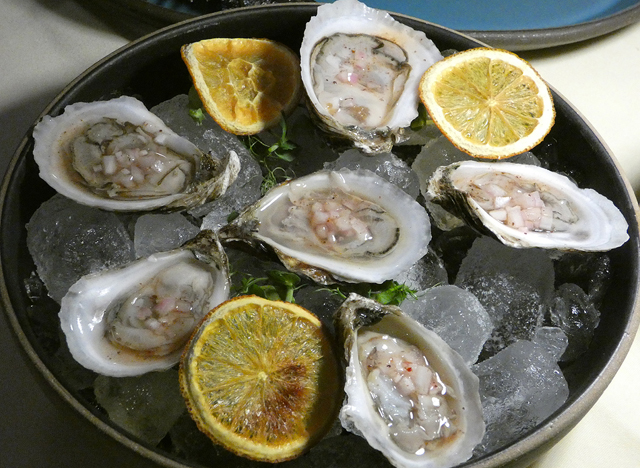
I’m not an oyster fancier, as I much prefer clams on the half shell. But Barbara loves oysters, so we decided to start with the East Coast Oysters with a Gooseberry and Fermented Ramp Mignonette. The taste of the Mignonette was unexpectedly interesting, and the oysters were of exceptional quality.

The appetizer sampling included a Lobster Croquette, Salmon Yakitori on wood skewers, and Shrimp Toast. Visually very Asian, the seafood quantity was small, but the quality, freshness, and execution of each morsel were perfect.

The Poached Pear Salad followed. The pear was sous-vide poached in Cabernet Sauvignon wine and delicate slices were served over baby kale, very crisp prosciutto, and a gorgonzola crumble covered by a Honey Walnut Vinaigrette. Exceptionally good!
Then Agnolotti del Plin were served. The lovely delicate pasta pillows were in a Roasted Duck Consommé stuffed with celery root and foie gras and sprinkled with a little parmigiano reggiano. A long time ago, I had a very similar dish during a stopover for lunch at a restaurant in Udine. It was impressive then, and it’s still very impressive now.

Next, the Oxtail Empanadas were brought to the table. The braised oxtail meat and parsnips were in a red wine demi-glace with a splash of chimichurri and red cabbage slaw decorating the plate. It was a tasty treat, but I wouldn’t consider it a true empanada. I’m sorry – I liked the dish, but I insist on correct descriptions when it comes to culinary terminology.
An empanada is a closed dough pocket filled with meat, cheese, or vegetables, or a mixture of all three, then baked or fried. This was an open-face triangle made with layers of phyllo dough with ground meat filling. It looked more like a Cretan Bouyatsa than an empanada, as I know empanadas well from having eaten lots of them in South America.

The next offering was a Berkshire Pork Ragu Bianco. It was a very interesting dish of Spinach Lumache, Berkshire pork shoulder meat, fresh fennel, and smoked ricotta salata with saffron threads on top of the sauce. I consider it a distinct winter dish.

The final offering was a dessert of chocolate cake layered with warm chocolate mousse, Frangelico cream, toasted hazelnuts, and candied orange. If you like chocolate, this is an exceptional rendition of this dessert. Make sure to leave a final gulp of the wine you will drink with the meal, as you need to cleanse your palate beforehand.
To finish the meal, there are only single or double espresso coffees. No other type of coffee is available. But a double espresso was perfect to accompany the rich chocolatey dessert!

A quiet island? In the Thames? A 40-minute train ride from London? Near bustling Windsor Castle? Lead me to it!
And Monkey Island Estate did not disappoint. With its borders of huge white hydrangeas, resident geese amidst the verdant grass, and low white buildings, it’s a hotel like no other. Originally the fishing lodge of one of Princess Diana’s ancestors, the Earl of Spencer, the estate has always accommodated guests of the titled. It’s still quite spiffy these days.
It’s as though you had your own place among leafy trees, ducks, and fat black crows. On this narrow stretch of land in the Thames, big healthy trees anchor the grounds. It has an enchantment and quiet that you don’t quite expect along the busy river.
Terrace rooms are sophisticated, and my room had black lacquer furniture and great views of the other main building. My bedroom door led to a stone terrace that runs along this sweet spot on the Thames. Surrounded by sweeping old trees, boats plied slowly along the river. It was charming, quiet, and intimate.

That other building, the Pavilion, is where meetings and dining take place. The dining room and the bar’s soft green velvet chairs, leather sofas and honey-colored herringbone floors are both comfortable and luxurious.
The estate is in the little town of Bray that has become a destination in itself because it has more three- Michelin star restaurants than London – the Waterside Inn by the Roux Brothers and Heston Blumenthal’s The Fat Duck. People stay at Monkey Island just to go to these epicurean temples.
Speaking of food, Monkey Island has its own kitchen garden, smokehouse, and beehives. Plus, they raise chickens. One night, I had a tasting menu called “A Taste of Bray.” Creative dishes geared to my request for low-calorie choices included an appetizer of heritage tomatoes with oregano and a tomato granita.

Surprisingly full of flavor for ices, the granita was spiked with a bit of Tabasco but easy on the calories. Monkey Island’s signature dish is rare duck with a bit of kale and deliciously roasted little pieces of potato, with a red wine jus. Paper-thin slices of black truffles offered an earthiness to the dish.
My finish was another signature dish, totally British: sticky toffee pudding. Deep richness surrounded by vanilla ice cream. Need I say more?
The estate also has a teak, double-width canal boat that was custom-designed for it. This vessel anchored in the Thames is called the Floating Spa. I had a signature treatment on it called the “Floating Massage.”
I started off with a drink of black currant syrup, star anise, and club soda, which turned the palest of lavender. I was cradled on the massage table, and heated stones soothed my joints. I was a pleasant mellow heap by the time we were through. Then my masseuse, Sophie, offered me an herbal tea along with an “energy ball” of apricot, coconut, sesame, and almonds. I was floating with joy as I left the boat.
It’s the little things that charm, as well as a few big ones. If you put your shoes outside the door for a complimentary shoeshine, they will be delivered by 6 a.m. White on white duvets and linens, Celebration’s Egyptian cotton towels, and a blissful walk-in shower all make for pleasure.
The shower actually said “on” and “off,” which was a savior after too many confounding modern ones that I couldn’t figure out how to use.

Delightful small tarts and croissants, along with free tea or coffee, were in the lounge for guests staying on the island. Breakfasts were bountiful with elegant cheeses, meats, smoked salmon, fruits, and several choices of perfectly prepared egg dishes.
Monkey Island has other rooms just across on the mainland and in the village. For those, three mini SUV’s are available for guest use. It’s a nice touch and a convenience as well. A Whiskey Snug on the Pavilion roof replete with fire pits opens in winter.
I was content staying on my little island, but I knew the area was teeming with sights to see. I was close to Royal Windsor, the famed Eton College, and the Ascot Races. Heathrow Airport was just 20 minutes away. So I got out and about but loved coming back to relax amidst the weeping willows and the chirping of birds.

It’s a shame that so many tourists think only of visiting beach destinations like Cancun when they travel to Mexico.
Mexico City simply has so much to offer and is a relatively safe place. No, you can’t swim or sun on a beach, but you can experience Mexican culture, art, fine food, and wine that you won’t experience anywhere else. For one thing, the city contains more than 150 museums.
This was my second visit to Mexico City, but it had been several years since I was there the first time. The city itself is beautiful with numerous monuments and its own version of the Champs Elysées called the Paseo de la Reforma.

My hotel, the Marquis Reforma Hotel & Spa, is located right on the Paseo de la Reforma. The 5-star property contains an Aztec liberty fountain in the lobby, and the hotel has two restaurants, as well as a bar. It was a comfortable hotel, and the service was fine. You certainly cannot beat the location.

One of the main draws of Mexico City actually exists 25 miles northeast of the city limits. Teotihuacan is the remains of an ancient city with several pyramids. Some of the original paintings of the civilization still exist, but little is known about the people who built the structures prior to the Aztec and Mayan cultures.

It’s a great place to visit, but lots of locals are aggressive about selling things to tourists, which can become an annoyance. Nevertheless, the site is not to be missed if you’re visiting Mexico city.

On the way to Teotihuacan, we stopped at a workshop where they make reproductions of much of the smaller Mexican artwork found in Mexico City’s spectacular National Museum of Anthropology. This place or another like it is usually a stop on the many Teotihuacan tours offered by various outfitters, and you will get a very hard sell from the merchants inside.

Outside of the store, we were treated to a demonstration of how early Mexicans used different parts of the agave plant for paper, needle and thread, and sweet syrup.

On the way back to the city, we ate lunch at La Gruta, a restaurant near Teotihuacan that is unlike any I have ever seen. It was built inside a cave with an opening in a small section to let some sunlight inside. We walked down the stairs to brightly colored tables and chairs.

La Gruta has been in existence since 1906, when it was used for private official functions, and it became a restaurant in 1929. I was surprised that I had never heard of it before. The food was fantastic. I started with a spinach salad with cactus flower dressing, followed by chicken with a red molé sauce that I wish I could have again right now as I write this. (In NYC, I can only seem to find negro molé sauce, while red is my personal favorite.)

On Saturdays and Sundays, La Gruta hosts Estampas de Mexico, an excellent dance troupe that performs several traditional dances, including a pre-Hispanic fertility dance with fire.

On another day, we strolled along the Zocalo, Mexico City’s main square and one of the largest squares in the world. The area is quite crowded, but that makes it great for people watching. There is a lot of shopping in the vicinity, and there are often special events held in the square itself.


If you’re a fan of Frida Kahlo, visit the Museo Frida Kahlo in the home where she was born and lived her last days. Besides some of her artwork, there are many personal items that belonged to her and Diego Rivera.

Even more interesting, if possible, is the Museo Dolores Olmedo, which houses an incredible collection of Mexican art (including works by Rivera and Kahlo), as well as Asian art. Olmedo donated her estate as a museum, and it includes beautiful gardens with peacocks and hairless dogs. I loved strolling the grounds and viewing Olmedo’s art collection.

One of the other major sites in Mexico City that we visited (often added on to a tour of Teotihuacan) is the Basilica of Our Lady of Guadalupe. The Basilica has a rich history and includes a modern building, as well as the original building that was completed in 1709. Both are examples of very different but impressive architecture. Pilgrims crawl for miles on their knees to the site every December 12 to pray.

Besides the culture, the best part of visiting Mexico City is the food. Some of the finest restaurants are contained in hotels, so locals even frequent these well-known establishments. We had dinner one evening at Habita, a hip boutique hotel with a rooftop terrace bar. We lounged on couches while having a drink at the bar, which sometimes shows films on the side of the building across the street.
Downstairs at the restaurant, I had delicately flavored snapper cooked in herbs for dinner. It arrived wrapped in paper, and the waiter unwrapped it with a fork. The restaurant tries to serve Mexican ingredients and products whenever possible, including local beers and bottled waters.

The same owner has another boutique hotel in the city called Condessa, which has been frequented by celebrities like Hugh Jackman, U2, and Tom Cruise. The hotel is famous for a four-legged member of its staff – a chocolate Labrador who greets guests upon arrival.
Our lunch in the open-air restaurant was excellent and beautifully presented with some of the best hot bread I’ve ever tasted, accompanied by very fine olive oil and balsamic vinegar. I also enjoyed the sangria, which is served differently from what I have found in the U.S. The wine and the vodka are poured separately, making for a two-tone glass with the clear liquid on the bottom and red on the top.

Everywhere we ate in Mexico City was excellent. The food was not only prepared well, but with an eye toward an aesthetic plate. The prize for the best meal, however, must go to Au Pied de Cochon, a French restaurant in the Presidente Intercontinental Hotel, located in the Polanco area.

The menu is the same as the Au Pied de Cochon in Paris, with perhaps slight changes to accommodate local ingredients. The service, the food, and the presentation were all exquisite. We were served many courses, including crispy shrimp, vegetable tartare, the best French onion soup I’ve ever tasted, a main course, and a selection of desserts. I chose a sautéed beef fillet with Bordelaise sauce and potatoes for my main course.

The Presidente Intercontinental Hotel itself has a number of “brand name” restaurants on the premises, including Chinese, Italian, and Mexican cuisine, as well as an English tea house. It’s the official residence of all heads of state, and U.S. President Barack Obama stayed in the two-bedroom presidential suite, which also has a sauna.
There is so much to do and see in Mexico City – much of which I haven’t experienced even in two visits – that you can easily spend an extended vacation there. If you’re in the U.S., the flights are quite easy and not too long.

When we first started making fondue, we doubled the recipe, which meant we needed a larger pot to prepare the meal. We found that the Le Creuset Enameled Cast Iron Cocotte spreads the heat evenly. It isn’t as light as a traditional earthenware coquelon, but it has two handles and is easy to move around.
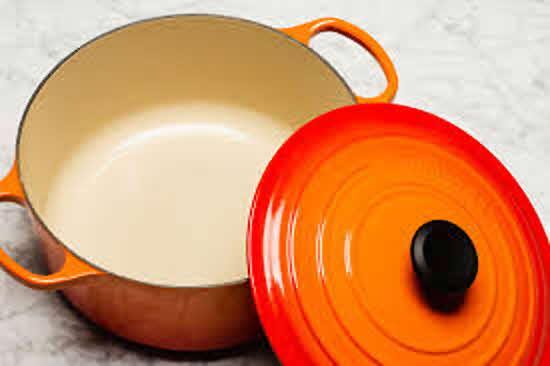
From Le Creuset, we also found a cast iron burner that takes a tin with jelled alcohol. This is used for keeping food warm in catering and is available even in supermarkets.
We use an adaptation of the classic recipe for fondue with a mixture of cheeses. Gruyère, of course, is the base, with half the weight Emmentaler and about two teaspoonfuls of Sap Sago for exceptional flavor.
All are dissolved in a dry white wine with 1/8 cup Luxardo’s Marascino instead of Kirsch and 2 teaspoonfuls of fresh lemon juice.
I’m very excited because I found two perfect wines, one to use when making the fondue and the other to drink with it after it’s finished. The wine I used for cooking is the Corvo Grillo, a dry white from Sicily that is inexpensive enough but also good enough to either drink or use in cooking. It’s a bit on the acidic side, but that works very well with the melting cheese.
The drinking wine with this fondue was from the Cantine Ermes, a co-op in the heart of Sicily’s Belice Valley. It’s called Vento di Mare Moscato and is a lovely, semi-frizzante from a grape ubiquitous in the Mediterranean that has adapted very well to the Sicilian terroir. This is an off-dry effervescent wine that’s nicely aromatic and paired beautifully with the fondue.
Knowing that the flavor of the fondue can only be as good as the cheese quality, I purchase the best available properly aged imported cheeses. The cheese mixture is dredged with a tablespoonful of flour.
The aromatics I use are two pinches of nutmeg, one medium-size fine diced garlic clove, and ground green Malabar pepper. I lightly brown the garlic in one teaspoon of sweet butter at the bottom of the cocotte before adding the wine, instead of just rubbing the pot with a halved garlic clove, as is the regular practice.
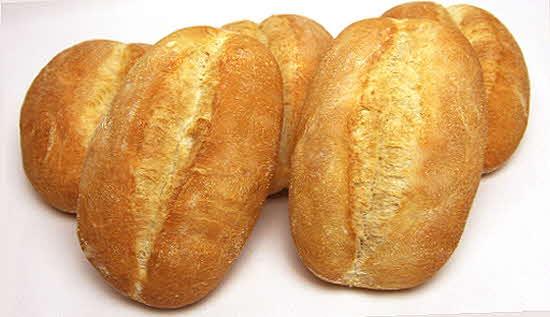
I like a good sliced baguette with a firm crust as a dunkable. Unfortunately, in our area, a good baguette is practically impossible to find. There are plenty of “Italian” loaves, but most are limp with a spongy interior. When older than second day, they’re like chewing on cardboard.
So the last time we made fondue, we improvised with cubed, fresh Portuguese hard rolls from a local bakery. We used three rolls cut into one-inch cubes, all with one side of crust. This wasn’t as good as a baguette, but much better than the supermarket’s “Italian” loaves.
There are many other dunkables that can be used with a cheese fondue, but I’m a purist. So I normally only use bread.
Again, a dish is only as good as the ingredients in it. Using the best fresh ingredients you can find is essential in preparing a great fondue.
Enjoy!