Sicily is producing some very interesting white wines. The largest island in the Mediterranean is now one of Italy’s most exciting wine producers. The wines, especially the whites, range from sweet or savory and crisp to complex and startlingly age-worthy.
The unique terroir of the region includes volcanic-rich soils, rolling hills, and Mediterranean climate, making it an ideal environment for citrus trees and grapevines.
Sicily used to be infamous for its cheap jug reds, but thankfully no more. Widespread focus is given to native grapes, organic viticulture, lower yields, and careful winemaking.
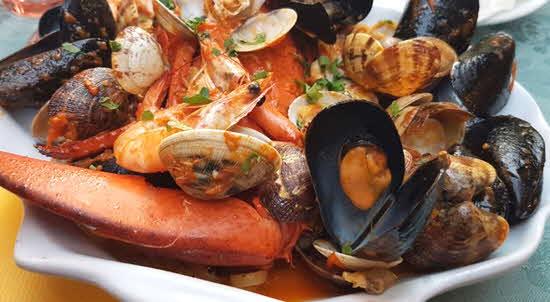
The vast majority of these wines are dry, especially the ones made from Grillo, an autochthonous (indigenous) Sicilian grape. Grillo creates wines with intense citrus, especially grapefruit, and white stone fruit aromas. The result is seductive and excellent with seafood and grilled fish. I’ve been drinking Grillo wines for many years now. I love them with a great meal.
In the past, we have written about the lovely Malvasia bottles produced in Sicily and the Aeolian Islands. But those are only a small number of the delicious wines that now come from this province.
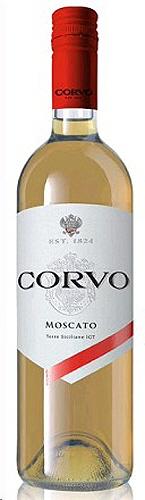
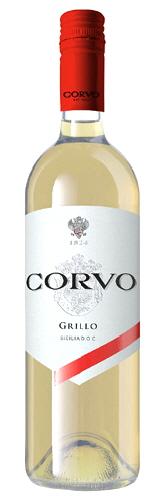
Corvo’s Moscato and Grillo white wines. Photo courtesy of Corvo.
Nowadays, there are numerous monovarietal bottles from white grapes produced there, like the Corvo Grillo and Corvo Moscato, which I normally enjoy with seafood, fish, or light desserts (for the Moscato). The drier, Grillo-based bottles, are some of the most tasty wines produced on the island and work very well with Sicily’s traditional dishes.
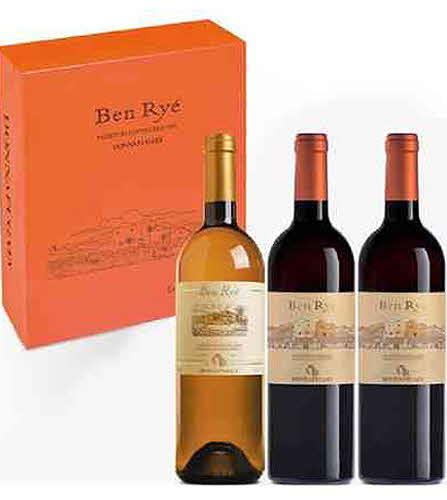
There are also beautifully sweet monovarietals, like Donnafugata’s Ben Ryé Passito di Pantelleria made from a Moscato d’ Alessandria clone, locally called Zibibbo. It produces outstanding perfumed sweet wines on Isola di Pantelleria, the small island between Sicily and Tunisia.
Donnafugata’s Damarino wine. Photo courtesy of Donnafugata.
Lovely blends, like Donnafugata’s Damarino, a blend of the three varietals Ansonica, Catarratto Bianco, and Grecanico, are produced in Sicily. Damarino has a delicate floral bouquet with hints of white flowers combined with citrus notes. In the mouth, there is fresh minerality. It’s great as an aperitif or accompanying appetizers and ideal as a complement to classic Mediterranean dishes, especially ones made from fatty fish.
Additionally, there are white wines from Planeta and Tasca d’Almerita that tend to be mostly on the dry side, again except for Malvasia and Moscato-based bottles. I visited those wineries and tasted their wines during a past press trip.
Price-wise, except for the Passitos, these are not expensive bottles, mostly coming in the $9-$25 range. The Passitos are in the $40-$80 range, even for the 375ml bottles that are almost standard now for sweet wines. Both the Malvasia and Moscato wines are enjoyably sweet and aromatic, but with enough underlining acidity not to be cloying.
It was seafaring Phoenicians and Greeks who initially planted grapes in Sicily. Some of the earliest locations date from 800 to 400 BC. According to Homeric lore, Scylla and Charybdis, the two immortal monsters that devoured mariners, were located on either side of the Messina Straights, a narrow channel between the eastern tip of Sicily (Punta del Faro) and the western tip of Calabria (Punta Pezzo).
Very strong tidal flows there change directions roughly every 12 hours, which made navigation very difficult for the shallow-keeled Greek trireme warships of Homer’s time.
Carthage, with territory on the southwestern half of Sicily, is responsible for planting the date and palm trees seen in many southern Sicilian gardens and parks.
Eventually, Roman settlers developed the vineyard terraces that are seen in different areas of the island.
If you haven’t tried these wines, get a bottle or two, and let us know what you think!
The Grand Hotel Amsterdam states a truism in its name, for this hotel is truly grand. The oldest part of the building dates to 1411, and its history includes housing a convent, a Royal lodging, the Dutch Admiralty, the City Hall of Amsterdam, and now a five-star deluxe luxury hotel.
Thankfully, its recent transition to a Sofitel Legend hotel, under the guidance of famous French interior architect Sybille de Margerie, managed to integrate all of the architectural features of its historic march through time into a modern-day hospitality venue updated with 21st century amenities.
Fashionably located facing the Oudezijds Voorburgwal (canal), the entrance is through a “grand” courtyard. The building to the left was the Saint Cecilia Convent and Catharina Monastery, which played host to Prince William of Orange in 1581 and the French Queen Maria de Medici in 1632.
After the Reformation, it was converted into the Admiralty headquarters and then functioned as City Hall for almost 200 years. Finally, in 1992, it was restored and opened as The Grand Hotel. In 2011, after extensive renovations, Sofitel took it over.
The entrance to the Grand Hotel in Amsterdam. Photo by Barbara Angelakis.
The courtyard that once played host to horse-drawn carriages now entertains sleek luxury vehicles, but with the same time-honored, liveried doorman greeting and assist from your car into the waiting reception.
You are welcomed like a returning friend and shown to one of the 177 guestrooms or 52 suites with butler service, each individually decorated in soft, elegant, natural tones and rich materials. Heads of state and celebrities often stay in one of the spacious and well -appointed suites or in the Canal House Suites, which are more like a private home than a hotel suite.
The twelve Canal House Suites were formerly official residences of famous Dutch admirals when the main building was the Admiralty headquarters during the 17th century.
Several of the Canal House Suites have an individual separate entrance from the street, but all offer complete privacy and security for visiting dignitaries or guests who prefer anonymity but with all the luxuries that a deluxe hotel can provide, including a Michelin star restaurant. Or if preferred, a guest can bring their own personal staff and/or cook, and everything will be provided with the suite stocked according to the guest’s taste.
The Council Chamber at the Grand Hotel in Amsterdam. Photo by Barbara Angelakis.
The hotel is so unique that daily sightseeing tours are offered to registered guests to just explore the historic building. Especially appealing was that all of the staff displayed enormous pride in the property, including the Head Concierge, Niels Essink, who led a team that included himself and five members of the international organization of excellence, Les Clefs d’Or.
From the refined lobby, you enter into the Library “OR,” which is off the reception. The library isn’t only a place to relax around the fireplace, but also the venue for The Grand Afternoon Tea. Weather permitting, however, this delightful tradition can be enjoyed in the Garden Terrace. This is a full-blown traditional English afternoon tea with all the trimmings.
Continuing on, we mounted the elegant marble split-stairway with stained-glass artwork leading to the upper floor banquet and conference rooms.
The Marriage Chamber at the Grand Hotel in Amsterdam. Photo by Barbara Angelakis.
The Grand has some of the most beautiful public rooms I have ever seen. One called the Council Chamber is where H.R.H. Princess Beatrix of The Netherlands got married in 1966. But for the ultimate in special occasion venues, the Marriage Chamber takes your breath away and is available for wedding ceremonies or private dinners.
The Marriage Chamber was designed by Chris Lebeau (1878-1945) when the building was Amsterdam’s City Hall. The walls, ceiling, and stained glass windows are decorated with delightful scenes of love and marriage, and when the windows are opened, an interior garden view is revealed.
Imagine a perfect wedding scene: sailing into the Oudezijds Canal, entering the grand courtyard, and being led through the marble halls to this spectacular room to be married. Afterwards, a reception in the interior garden followed by a wedding night in one of the elegant suites.
During the WWII Nazi occupation, the room was declared “Entartete Kunst” or degenerate art, and it was covered over until 1953, when the Mayor of Amsterdam, Arnold J. d’Ailly, had the wallpaper removed to reveal the spectacular design once again.
The spa pool at the Grand Hotel in Amsterdam. Photo by Barbara Angelakis.
Today, no deluxe hotel is complete without a spa, and at The Grand, there is the SoSPA, which houses an indoor heated swimming pool, Turkish Hamam, Jacuzzi, and sauna. There is a fitness room and, of course, rooms for different massages, facials, and body treatments with elite French skincare products.
Bridges Restaurant. Photo by Barbara Angelakis.
The Michelin star restaurant, Bridges, can be entered from the hotel, but for diners who are not registered guests, there’s a separate entrance from the street. The name “Bridges” refers to the fact that the restaurant fronts the river between two pedestrian bridges.
The restaurant is a fish and seafood establishment, and its motto is taken from English writer Jonathan Swift: “Fish should swim three times: first in the sea, then in butter, and finally in good wine.”
Ulysses – archetypal hero of The Odyssey, Homer’s epic morality tale of folly and adventure, wisdom and foolishness, loyalty and betrayal – purportedly journeyed along the Tyrrhenian Sea off the coast of Lazio, southeast of Rome.
In Homer’s day, the waters between Italy and Sicily were thought to be fraught with hidden horrors awaiting the adventurer who was willing to leave the safety of home for uncharted seas and lands.
According to Homer, Ulysses found monsters, giants, and bewitching creatures galore in these waters. While on our own “odyssey,” we found a region filled with lovely seaside hotels, beautiful sand beaches, stunning vistas, and ancient ruins that can be explored without hoards of sightseers blocking our access or cannibalistic giants hurling rocks at us.
The fresh seafood of Lazio, Italy. Photo by Manos Angelakis.
Food from the sea, fresh as can be, and a warm friendly reception from its inhabitants, make this a go-to area when visiting either Rome or Naples.
Our journey southeast of Rome centered mainly between the ancient Appian Way – the longest Roman road dating to 312 BC – and the sea, where we visited both seaside and mountaintop towns such as Formia, Gaeta (pictured at the top), Minturno, Sperlonga, Sermoneta, Ninfa, Sabaudia, Terracina, and Norma.
Rome is the largest city in the region of Lazio and by far the most well known, but all of Lazio has a rich history that spans millennia. There are fascinating ancient and modern sights to explore once you leave Rome and head for the surrounding countryside.
A World War II tank in the museum in the town of Latina. Photo by Manos Angelakis.
By the way, for World War II buffs, the town of Latina, second largest town in Lazio, has a museum – the Piana delle Orme – of rare ordinance salvaged from the WWII fighting at Anzio, such as a Curtis P40 (Kittyhawk), an amphibious M4 Sherman DD (also known as a Donald Duck).
A German plane from World War II at the museum in the town of Latina. Photo by Manos Angelakis.
It also has a German Messerschmitt Me 262, the first military jet to fly successfully during WWII, plus other newer exhibits in its expanded aviation museum that includes jets and large transport planes.
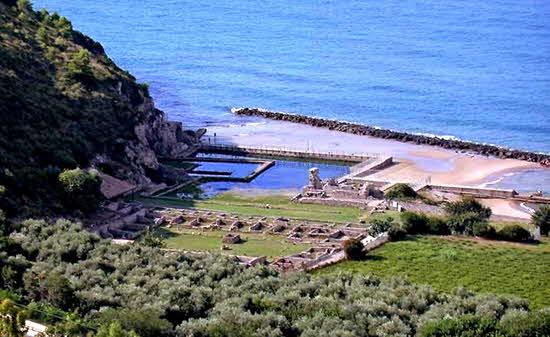
The ruins of the Tiberius Villa. Photo by Manos Angelakis.
Long a playground for both ancient and modern-day Italians, one of the many highlights of our journey was a visit to the Tiberius Villa along the Sperlonga coast. Tiberius was the second Emperor of Rome, and his villa was one of opulence and indulgence where his every whim was carried out.
There is little left except the foundation walls of the villa itself, but Tiberius was a great fan of Ulysses. In a large natural cave on the site by the sea, he built a theater for general bacchanalia and staged performances of Ulysses’ journey.
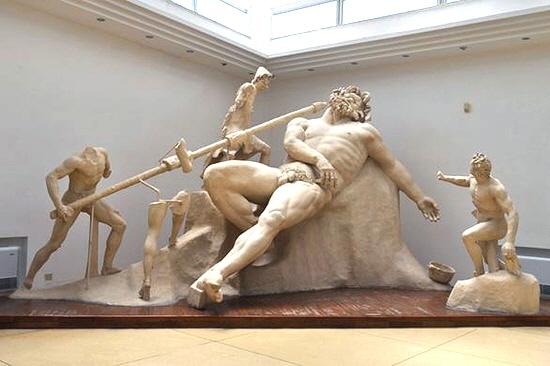
A statue of Cyclops at the museum by the Tiberius Villa. Photo by Manos Angelakis.
Huge statues of Cyclops, the one-eyed giant, Circe the temptress, and Scylla the six-headed she-dog, along with life-size depictions of Ulysses and his men that once were set in and around the cave, have been partially restored and can be seen in the villa’s adjoining museum.
The statues are Hellenistic (created by sculptors from Rhodes) and date from the 2nd century BC. In Hesiod’s Theogony, we find that Circebore to Odysseusthree sons: Agrius, Latinus (after whom the area was supposedly named), and Telegonus, who ruled over the Tyrsenoi, i.e. the Etruscans.
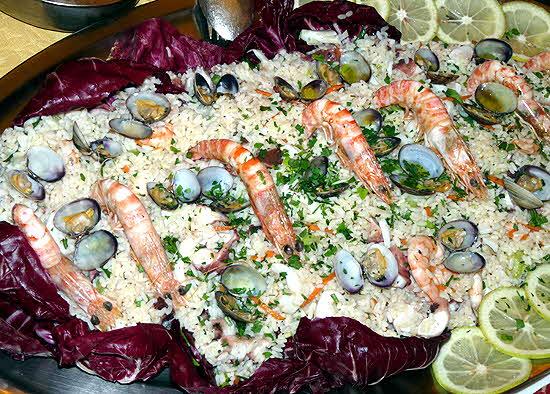
Seafood risotto in Lazio. Photo by Manos Angelakis.
After our visit, we stopped for lunch at a seaside hotel. An infinite variety of seafood, fresh from the sea, and local specialties fresh from the garden, plus a lovely Falanghina wine greeted us in a spread fit for Tiberius himself.
Do yourself a favor the next time you visit Rome, and take a side trip to the many beautiful countryside towns of Lazio.
The Greeks or Hellenes were never really a totally homogeneous group. Their language is considered an independent branch of the Indo-European group of languages, and the people came down in successive waves of migrating tribes from North of the Balkan Peninsula, settling in different regions of what is now the Greek nation.
For example, the Dorians in the 13th century B.C.E were the last of the Greek groups to migrate south from their area around the lower Danube River, pushing south by Slavic tribes migrating from further north and east.
In Greece, people lived in city-states that were constantly at war with each other. However, when a common enemy appeared, all disputes were forgotten, and the city-states joined in an alliance to fight the common foe.
We see this in the Homeric epics about the siege and fall of Troy, as well as the Persian incursion that resulted in the Thermopylae battle of 480 B.C.E (the sacrifice of Leonidas and the 300) and the naval battle of Salamis of the same year.
Ancient Greek Writing in the Celsus Library in Ephesus, Turkey. Photo by Manos Angelakis.
The Greek language developed in numerous dialects, depending on where the speaker was located. The main ancient language dialects were Attic, Ionic, Aeolic, Arcadian, and Doric, most of them with regional subdivisions. Some dialects are found in literary forms, while others are seen only in inscriptions.
Even in modern times, a resident of Northern Greece would have difficulty understanding many words in the current Cretan, Cypriot, or Ionian dialects.
Let’s not forget that different ethnic and cultural groups such as Rome and medieval Italy, the Ottoman Empire, the British Empire, 19th century France, etc. were at times governing parts of Greece and left a linguistic influence, as well as a culinary legacy.
Through emigration and the establishment of Greek colonies, Greeks populated mainland Greece and Crete, Cyprus, Southern Albania, Anatolia, parts of Southern Italy, pockets in Southern France and Eastern Spain, and other regions of the Mediterranean and the Black Sea. The Greeks were mainly traders constantly in search of new markets.
Greek colonies were also found in Africa, including Egypt, present-day Tunisia, and as far south as the Congo. Later on, Alexander of Macedonia conquered the Persian Empire that extended from the Hellespont to present-day Pakistan and Afghanistan. Fragments of the Greek language and traditions can still be found throughout the territories his generals governed.
Right after World War I, there was a very large Greek migration to Western Europe and the United States that continued until the early 1950s. Then, the migration patterns changed, and Greeks went mostly to Australia and the USA. Certain areas, such as the Northern Peloponnese, Crete, and the Aegean Islands, saw far more outgoing emigrants than mainland Greece.
From the early 1930s on, the main cities of Athens, Thessalonica, and Patras saw the brightest and best educated young people leaving Greece to study abroad in both European and American universities. This happened because the Greek higher education was considered inferior, and lucrative work prospects were extremely limited.
After graduating abroad, many never returned. This so called “brain drain” continues to a lesser degree, even today!
Mycinae Palace Lion’s Gate. Photo by Manos Angelakis.
The earliest groups that populated Greece were the Mycenaeans and the Minoans –names given by archaeologists of the late 19th century. The names were given based on the most prominent Greek settlement of the Homeric epics – Mycenae – and the name of the legendary king of Central Crete, King Minos.
The Mycenaeans mostly lived around the Peloponnese, and the Minoans lived on Crete. We know much about the Mycenaeans from the plays of Aeschylus and the Homeric epics. We also know about them from the excavations of the Mycenae stronghold and finds of the 19th century German archaeologist, Heinrich Schliemann.
Reconstruction of the Palace of Knossos in Crete. Photo by Manos Angelakis.
We know about the Minoans from the Athenian myths about the Minotaur and the conquest of Knossos, the capital of the Minoan civilization, as well as from Sir Arthur Evans, who not only excavated what he considered the “Palace of Knossos” site but also set about preserving and reconstructing parts of it.
In my opinion, Crete and its colonies had the most sophisticated civilization of the Stone and Bronze Age Mediterranean world. The island was a major trading partner to Pharaonic Egypt, exporting olives and olive oil, carob, medicinal herbs, wine, and honey to them. And that was way before Alexander conquered Egypt and left his general, Ptolemy (who was a Macedonian Greek), to run the country.
Minoan ship fresco in Akrotiri, Thera. Photo by Manos Angelakis.
Another major Minoan trading and cultural center was the Bronze Age settlement on the volcanic island of Thera (Santorini), now known as Akrotiri.
Akrotiri was destroyed in the volcanic eruption that obliterated part of the island around 1500 B.C.E. That destruction supposedly gave birth to the myth of Atlantis, when Plato wrote about the story he was given by Sonchis of Saïte, an Egyptian priest.
In his book, On Isis and Osiris, Plutarch gave a detailed description of the Greek wise men who visited Egypt and received advice from the Egyptian priests. Thales of Miletus, Solon, Pythagoras, Lycurgus of Sparta, and Plato all supposedly traveled into Egypt to converse with the priests. Cultural tourism is NOT a new phenomenon!
The very sophisticated ancient city of Akrotiri was unearthed by Greek archaeologist, Prof. Spyridon Marinatos, when he conducted excavations between 1967 and 1974, and it’s a fascinating site to visit.
Monkey fresco in Akrotiri, Thera. Photo by Manos Angelakis.
It’s debated whether Akrotiri was truly the site of Atlantis because Plato said Atlantis was beyond the Pillars of Hercules, which is the Strait of Gibraltar.
Nevertheless, the Akrotiri excavations by Prof. Marinatos have proved that it had a very advanced, trade-oriented civilization that traveled beyond the southern Mediterranean Sea, based on frescoes of shipping and African animals decorating Akrotiri buildings.
The Mycenaean civilization became known mostly from the Homeric epics. The Mycenaean language was the most ancient form of written language that has been discovered and deciphered. It was used mainly for recordkeeping and inventories at royal palaces, as well as some large “international” trade ventures. We don’t actually know what the spoken language sounded like.
The Phaestos Disk. Photo courtesy of the Heraklion Archaeological Museum.
Having stamped ideograms even earlier than Linear B (a later written form), the disk of Phaestos was discovered in 1908 at the Minoan “palace” of Phaestos (south-central Crete).
On its two sides, it bears the oldest known imprinted text of unknown content, as there isn’t enough information to decode the text.It’s the earliest example of written Greek, back to more than 3,700 years ago, making Greek the oldest European language that is still in use today.
Much of our medical, economic, and technical nomenclature was developed in Greece. Yes, “atom” is a Greek word (meaning the smallest that can’t be divided into even smaller units), “mechanism” is a Greek word, “esophagus” is a Greek word (meaning interior for eating) and “grammar” is a shortened Greek word (from grammatiki, meaning the proper letter sequencing in a word).
Linear B, a Greek dialect of Bronze Age Aegean, was a later version of the Minoan language and was discovered on tablets initially in Crete and later at Pylos, Mycenae, Tiryns, and Thebes. Linear B was finally deciphered by Michael Ventris in 1952, as there were many sample tablets available to researchers.
Greece uses two versions of the modern/formal Greek language – one used in formal documents and some of the older but still published newspapers, and one spoken every day, which is more idiomatic and incorporates more foreign words.
The language was initially formed in the mid-19th century at the intellectual and literary center of Athens once Greece became a kingdom after its liberation from the Ottoman Empire. It was formed to “cleanse” the language from the many foreign (Ottoman, Arabic, French, and Italian) words that had been incorporated in the spoken language during the years of occupation.
Many of the modern sciences also have their roots in Ancient Greece. Even a modern vending machine owes its roots to a Greek – Hero of Alexandria – who was a mathematician, physicist, and engineer living around 10–85 C.E.
His invention took coins and dispensed holy water. When someone put a coin into the machine, it would drop into a pan that was attached to a lever. The weight of the coin in the pan would pull on the lever, releasing a flow of water, until the weight of the coin would make the pan slant enough to slide the coin in a container below.
Since coins had different weights depending on their value, the device would dispense appropriate amounts of the consecrated water. Hero also invented the steam engine! As the Ecclesiastes said, there is nothing new under the sun!
The Delta Sky Lounge in the Kansas City airport is fairly new – opened in February 2023. The entire airport was refurbished not long ago, and this is its only lounge.
The space spans more than 11,000 square feet to hold 200 guests, but the Monday morning I was there recently, it was virtually empty. I have to admit that was a treat, as most of the lounges I’ve visited in other airports, whether Delta or otherwise, have been packed.
I enjoyed a free mimosa from the bar, but I have to admit that the breakfast menu was a little disappointing. Since I wasn’t excited about the egg bake or the meat options, I appreciated that they included a butternut squash salad with greens and quinoa, as well as some potatoes.
But around 11am, the menu was changed to lunch, which allowed me to have a bit more food to hold me until I got home. For that meal, they served tasty turkey sliders, pasta, and chocolate chip cookies.
A particularly stylish section of the Delta Sky Lounge in the Kansas City International Airport (MCI). Photo by Melanie Votaw.
I have yet to experience a lounge with truly good food, but as lounge food goes, this was quite good. But what I appreciated most about the lounge was the stylish decor and different comfortable seating possibilities.
I chose to eat in the area with three televisions. The sound wasn’t on, but they were closed captioned so that we could keep up with the news. Since I was traveling the Monday before Hurricane Milton, I was keen to stay informed of its progress.
Part of the seating in the Delta Sky Lounge in the Kansas City International Airport (MCI). Photo by Melanie Votaw.
Possibly my favorite part of spending time in a lounge is the opportunity to use much nicer and cleaner bathrooms than are found in the regular terminal. This lounge was no exception, and as I’ve found to be the case in all Delta lounges, the staff was friendly and attentive.
If you’re leaving on a flight from MCI in Kansas City, try to get entry to this Delta Sky Lounge.
North of Sicily in the Tyrrhenian Sea, a group of seven volcanic islands rise from the cobalt-blue waters. They are called Salina, Lipari, Vulcano, Alicudi, Filicudi, Panarea, Basiluzzo, and Stromboli.
The group was named after Aeolus, god of the winds, by Greek settlers who emigrated to the region from the city of Corinth and brought with them Malvasia grapes that produce the spectacular sweet golden wine made on these islands.
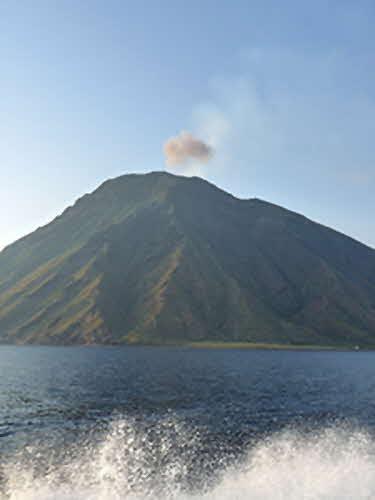
Stromboli volcano. Photo by Manos Angelakis.
Vulcano and Stromboli are the last active volcanoes in the area. Stromboli, still belches steam and smoke, and when viewed from a boat at night, there are streams of Roman candle-like eruptions that illuminate the skyline. During the day, Stromboli is seen expelling plumes of smoke every five minutes or so like an old man puffing on a corncob pipe.
Lipari is the largest island in the archipelago, but Salina and Panarea are the most popular with Relais & Châteaux hotels and resorts dotting the islands. This is the playground of Sicilian aristocracy and Italy’s very beautiful and very wealthy, as well as the setting for fertile vineyards and picturesque villages.
In the summer, the port overflows with multi-million-Euro yachts. The stunning blue waters provide sports opportunities for swimmers, anglers, sailors, and divers. Meanwhile, gourmets sip honey-sweet Malvasia wines from the local vineyards.
A rock monolith off the coast of the island of Salina. Photo by Manos Angelakis.
The best way to enjoy Salina is by boat. There are many places where you can rent one, or you might prefer to tour the island under the guidance of a skipper. A boat trip to the offshore islets is a must. The formation and colors of the rock monoliths rising from the sea is unique.
Capofaro resort on the island of Salinas. Photo by Manos Angelakis.
One of my favorite European resorts is located on Salina in the center of the Caravaglio vineyard, called Capofaro. It is a Relais & Chateaux property, which is a collection of 27 farmhouses located amongst the sprawling vines, updated with the latest luxury furnishings. You’ll definitely want to try the Michelin-starred restaurant Capofaro Locanda & Malvasia.
Sorbets at Da Alfredo in Lingua on the island of Salina. Photo by Manos Angelakis.
You are also likely, however, to want to spend some time in Lingua on Salina, lying on the black sand and stony beach or lingering over a granita at the famous Da Alfredo bar, an island institution. Sorbets of fresh fruit or ground nuts are made on the premises by Alfredo and his sons. In season, the chocolate, orange, blackberries, hazelnut, lemon, peach, apricot, pistachio, almond, melon, or vanilla sorbets are joined by fig and fichi d’india (prickly pears).
The Aeolian islands are rustic and quaint at the same time that they’re sophisticated, romantic, and international. What you’ll get out of them depends on you and your personal taste, but they’re definitely worth a visit.
Yearning for both a fun and a delicious dining experience to usher in the upcoming Halloween season, we opted for a visit to the Sugar Factory Restaurant in the Hard Rock Hotel & Casino in Atlantic City. This was our second visit to a Sugar Factory eatery. Last year, it was a Manhattan location, celebrating the Christmas holidays. We had such a good time that we thought a repeat should be on our menu.
Like the New York City venue, this American brasserie is a very interesting, large, and quirky restaurant with a varied menu that features crowd-pleasing dishes like burgers, tacos, pastas, stir-fries, and salads, as well as sandwiches, fajitas, enchiladas, waffles, and various other grilled and fried dishes. They also make special seasonal dishes based on upcoming holidays.
The spidery wall at Sugar Factory Restaurant in Atlantic City. Photo by Manos Angelakis.
Even the pickiest eaters will probably find something interesting to order, and for a more traditional eater, they serve high-end dishes like lobster tails, salmon, and rib eye steak. The dessert section is equally impressive and mouth-watering. If you have a sweet tooth, you’ll love their spectacularly designed sundaes and milkshakes, as well as the seasonal special sweets.
The Frankenstein and spider wall at Sugar Factory in Atlantic City. Photo by Manos Angelakis.
On this visit, there were a number of specials based on Halloween, and they didn’t miss an opportunity to spook us out. But to be fair, we ordered from both the standard menu and the Halloween one that featured “unusual” seasonal dishes and special drinks.
Our initial drinks were the Vampire Kiss (coconut rum with strawberry nectar topped with sparking wine) and a Devil’s Margarita (a blend of 818 tequila, fresh strawberry and lime, garnished with gummy bats and spooky eyeballs, served in a cloud of mist produced when liquid nitrogen was poured over the top of the drink). This was served in a skull-shaped cauldron! After the smoke cleared, the drink bubbled away inside the cauldron – a bit corny, but it certainly brought the seasonal thrill to focus.
“Bat wings” in a spiderweb basket at Sugar Factory. Photo by Manos Angelakis.
We started our eating with the “Bat Wings.” They were fried chicken wings tossed in a delicious spicy Buffalo sauce, which gave the wings a nice kick, accompanied by celery sticks and served with ranch dressing in a purple “spider web” basket. The other appetizer was breaded and deep-fried Mac & Cheese pops in a crab-shaped plastic container that looked like a large bronze crab.
Sugar Factory’s club sandwich. Photo by Manos Angelakis.
The regular menu features some beloved standards such as burgers and fries in every possible configuration, club sandwiches, a King Kong sundae for 6 or 12, and numerous other appetizers, combination dishes, and sweets. There are a variety of items made only at Sugar Factory restaurants. But even the standards are given a quirky presentation, and they were fun to see on the table, as well as fun to eat.
The kid in me almost decided to make caterwauls in the middle of the restaurant, which was seasonally decorated with spiders and spider webs, jack-o-lanterns, skulls, skeletons, and witch hats. Instead, I thought, “What are you thinking?” and ordered a Fuzzy Peach Goblet instead. I’m very proud to say I finished that yummy drink as well!
Service was very good and prompt. Our waiter, Chris, suggested the Shrimp Alfredo – shelled large shrimp with noodles in garlic, butter, cream, parmesan, and Romano cheese. Yummy!
Multicolored drinks at Sugar Factory. Photo by Manos Angelakis.
We loved the look of the multicolored drinks. There was a group of six a few tables away from us, and they ordered drinks that were each a different color. When the barperson lined them up for the server, there was a rainbow of colors and tastes right there at the bar top.
We felt full because the portions are of considerable size. But then came time for dessert, and who can resist a luscious banana split?
The banana split at Sugar Factory. Photo by Manos Angelakis.
Giant scoops of strawberry, chocolate, and vanilla ice cream with strawberries, caramelized bananas, and chocolate malt balls topped with chocolate, strawberry, and caramel sauce, whipped cream, toasted walnuts, and powdered sugar with a gummy cherry on top! And we also split another delight – S’mores Hot Chocolate!
I thought we had over-ordered (there were only two of us), but it was certainly a spectacularly tasty finish.
The King Kong Sundae at Sugar Factory. Photo by Manos Angelakis.
The pièce de resistance, though, was the King Kong Sundae – a humongous dessert for 6 or 12. The neighboring table of six, who seemed to be celebrating something, ordered it for their finish. It was so large that I was surprised they devoured every spoonful of it. A valiant effort! As they said, “Too much ain’t enough!”
There are currently 23 Sugar Factory restaurants throughout the country. Whenever I’m in a city where one is located, I’ll make sure to eat there. Kudos to all.
Italy and Switzerland to redraw borders. Melting glaciers in the Alps are the reason for this change near Zermatt, Switzerland and involves a 330-foot-long segment.
Delta Partnership with Incheon Airport in South Korea. Currently, Delta Airlines’ Asian hub is Tokyo’s Narita Airport, but it will soon be replaced by Incheon in South Korea.
Hydrail trains in Spain. A company in Spain is going to build the first high-speed hydrail trains. This could be very exciting for Europe!
Dubrovnik, Croatia. Photo by Aaabbbccc.
Overtourism in Dubrovnik. To curb the influx of “Game of Thrones” fans in Dubrovnik, Croatia, the city will start a “special traffic regime zone” to limit vehicles in its Old Town.
JetBlue food changes. JetBlue will no longer serve hot meals on transatlantic flight, to which we say “boo!!”
European City of the Year.Food and Travel Magazine has named Berlin as the European City of the Year. What do you think?
Berlin. Photo by Melanie Votaw.
Airplane engine parts documents falsified. Well, this is disturbing! A TAP Air Portugal employee discovered the problem, and the manufacturer (Safran) then figured out that the documents were indeed falsified. This affects only about 1 percent of Safran’s engines, but that isn’t particularly comforting.
New United Airlines international routes. United is adding more routes to France, Italy, and Spain, as well as brand new routes to Greenland, Mongolia, and Senegal. It’s their biggest international expansion, including 8 new cities and 13 routes, which start in May of 2025.
Uber shuttles to and from LaGuardia. Uber now has a shared shuttle that you can take between Manhattan and LaGuardia Airport in NYC. There are two routes – one between Terminals B and C and Grand Central Terminal and Port Authority; and one between Penn Station and Terminals B and C. (The shuttles operate in both directions.)
Einstein Museum! The city of Ulm, Germany dedicated an Einstein museum in July called “Die Einsteins.” it’s about his entire family, as Ulm is the town of his birth. It’s housed in the building where his grandparents lived. Ulm wasn’t on my radar before this, but now, I really want to go there!
This beautiful 4-star Loews Hotel in Kansas City, Missouri is located downtown right across the street from the Kauffman Center for the Performing Arts. It’s surprisingly large for an inner city hotel with 800 rooms and suites and a sprawling lobby that contains many comfortable seating options, including a partially enclosed space with a fireplace.
The Kauffman Center for the Performing Arts in daylight. Photo by Melanie Votaw.The Kauffman Center for the Performing Arts lit up at night. Photo by Melanie Votaw.
Escalators in the lobby lead to meeting rooms, and the hotel is connected to the convention center via a pedestrian bridge. So obviously, it’s a popular location for conferences. That’s no surprise since the building contains a whopping 22 meeting and banquet rooms, three board rooms, and the largest ballroom in the city. There’s also a 6,000-square foot outdoor terrace.
The Loews Kansas City Hotel lobby. Photo by Melanie Votaw.A lobby lounge section of the Loews Kansas City Hotel that contains a fireplace. Photo by Melanie Votaw.
It’s also apparently quite popular for weddings, as I saw two wedding parties during my two-night stay. The lobby bar (Bar Stilwell) always seemed to be bustling, too – even during the daytime hours. This made me a bit concerned that the hallways upstairs might be loud, but they weren’t. I had a nice quiet sleep.
The bar in the lobby of the Loews Kansas City Hotel. Photo by Melanie Votaw.
Other amenities include a 24-hour fitness center and an indoor saltwater lap pool. Valet or self-parking are both available, and it’s a fully non-smoking property that’s pet-friendly (for an additional fee).
My Premium room at the Loews Kansas City Hotel. Photo by Melanie Votaw.My room at the Loews Kansas City Hotel. Photo by Melanie Votaw.
Since I booked my room through American Express, I got a free upgrade to a Premium room on the 23rd floor with a city view. It was about 350 square feet with a pull-out couch, floor-to-ceiling windows, and curtains that closed all the way (much appreciated). It had a shower but no tub, and the bath products were by Julien Farel. I also appreciated that the shower was very simple to operate. Sometimes, I spend ten minutes just trying to figure out a hotel shower.
The view from my city view room at the Loews Kansas City Hotel. Photo by Melanie Votaw.The bathroom amenities at the Loews Kansas City Hotel. Photo by Melanie Votaw.
The room amenities included a large safe, a Keurig coffeemaker, a 55-inch TV with lots of channels and current movies to rent, USB ports and electrical outlets on the bedside lamps (thank you!), a refrigerator (no minibar), free Wi-Fi, a desk, 24-hour room service, and laundry/dry cleaning service. The bed was very comfortable with a Stearns & Foster pillowtop mattress.
My room at the Loews Kansas City Hotel. Photo by Melanie Votaw.
I think Loews hotels have the best bathrobes of any I’ve experienced. They’re much softer than your average terry cloth, both outside and inside, making them feel especially luxurious against your skin. Some 4-star properties these days don’t include a robe, so I’m always pleased when I find one in my room. I didn’t find any slippers, but those are generally reserved for 5-star hotels.
The bathroom of my room at the Loews Kansas City Hotel. Photo by Melanie Votaw.
There are several dining options on property. The Stilwell serves classic American fare, and there’s Horsefeather Social for quick bites and drinks. There’s also a grab and go market called Red Wheat Baking Co. for artisanal coffees, sandwiches, and bakery goods.
A lobby lounge section at the Loews Kansas City Hotel. Photo by Melanie Votaw.A sculpture in the lobby at the Loews Kansas City Hotel. Photo by Melanie Votaw.
Nevertheless, my one complaint about the hotel was that I wasn’t impressed with the food. I had a mediocre chicken Caesar salad and a mediocre breakfast of eggs, toast, and home fries. For a property of this caliber, the food really should be better.
Overall, however, I enjoyed my stay immensely and wouldn’t hesitate to stay there again when in Kansas City, Missouri.
Recipe translation by Gabriella Venezia, trevisoguide@hotmail.com
On a trip to Treviso, Italy, I was introduced to the city’s proud claim to fame as the place where tiramisù was first created. In the late 1800s, the owner and head cook at a small restaurant and sweet shop called Le Beccherie in Piazza Ancilotto, just behind the Piazza de Signori in the center of Treviso, needed a “pick me up.” Actually, “pick me up” is what the word “tiramisú” means.
She created the recipe, and to use 2021 terminology, it went viral, becoming a favorite sweet worldwide. The recipe comes from the “sbatudin” – a mix of egg yolks beaten together with sugar – and is commonly used by Treviso farmers as a restorative for newlyweds.
The home of tiramisù has undergone a complete revamping, but it’s still in the same location where it has been since 1935. It’s no longer owned by the Campeol family, but their famous dessert lives on. In fact, an updated version has been created.
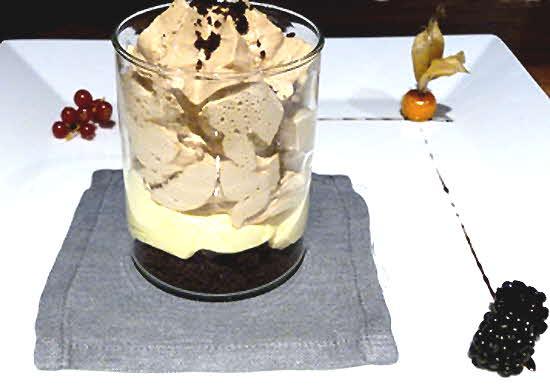
The new version is called “Scomposto,” and while it was beautiful to behold and delicious to taste, the original still won our hearts.
Scomposto. Photo by Barbara Angelakis.
A Tiramisu recipe for 6 people follows.
Preparation time: 20 minutes
Ingredients: 4 eggs 2 cups fresh mascarpone cheese 3/4 cup sugar 3/4 cup dark rum or to taste 4 cups of espresso coffee or brewed/filtered coffee 3 teaspoons powdered bitter cocoa Salt to taste 24 ladyfingers (in Italian, ladyfingers are called “savoiardi” and are somewhat hard with sugar crystals on top)
Method:
Separate the eggs, whites in one bowl, and yolks in a second bowl. Whip the egg whites until frothy. Whisk the yokes with 1/2 cup of the sugar. Add the mascarpone cheese to the yolk and sugar mixture, and stir. Add the rum and whipped egg whites. Gently mix until absorbed.
Prepare the coffee. Add the balance of the sugar and 4 teaspoons of water, and pour it into a flat-bottom bowl.
Quickly dip the ladyfingers one at a time in the coffee, and lay them in the bottom of a rectangular pan packed close together.
Cover the first layer of ladyfingers with the mascarpone cream mixture, and continue the process until all ladyfingers are in the pan covered with mascarpone cream. The final layer must be the mascarpone cream.
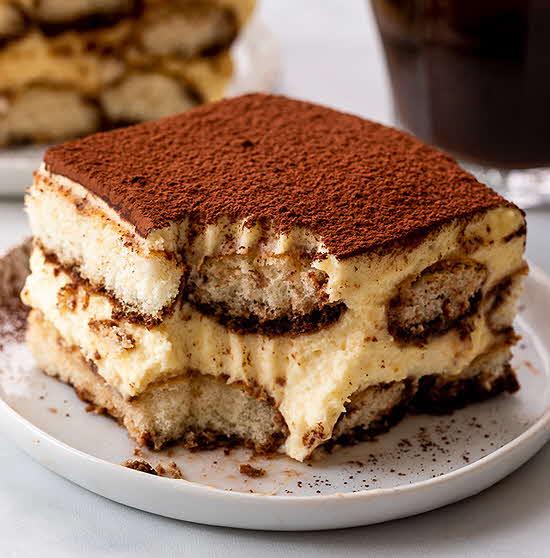
Homemade tiramisu. Photo by Barbara Angelakis.
Put the pan of tiramisù in the refrigerator for at least 3 hours, and just before serving, sprinkle it with powdered unsweetened cocoa. It’s easiest to use a sifter.
Serve with a side glass of espresso. (To be authentic, the espresso must be served in a small heavy glass, not in a cup).
Editor’s note: You can make a delicious dairy-free version of tiramisu by substituting coconut cream for the mascarpone. It will be a bit watery while you make it, but if you refrigerate it long enough, it will set at least to a sufficient degree. The coconut flavor lends itself to the recipe and is very tasty.